Once the flatbed pulls away, most people never think about their old car again. But a scrap car doesn’t just disappear. It goes through a fairly orderly process that recovers most of what it’s made of.
First stop: assessment
When a vehicle arrives at the yard, it’s checked to decide its best use. Some vehicles have parts worth pulling and reselling. Some are better sent straight to recycling. A newer wreck and a thirty-year-old rust bucket take different paths.
Fluids first, always
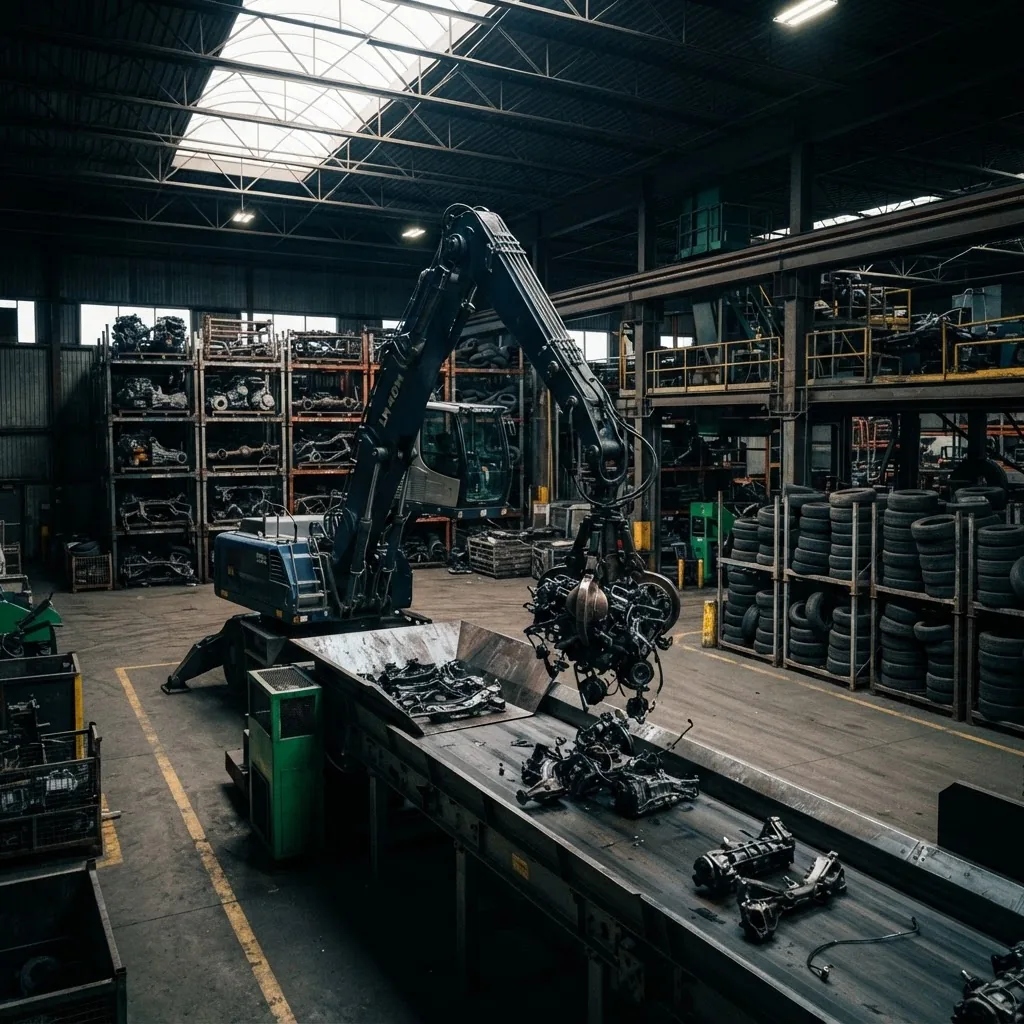
Before anything else, the fluids come out: engine oil, coolant, brake fluid, transmission fluid, washer fluid and fuel. Each is collected and sent for proper handling, so it doesn’t end up in the soil or the Fraser River watershed. Batteries go to battery recyclers, and tires go to tire recycling.
Parts, then metal
Usable parts such as starters, alternators, mirrors, glass and good tires are pulled and resold, keeping other cars on the road for less. What’s left is crushed and shredded, and the metals are separated by type and sent back to be made into new steel, aluminum and copper products.
A car sent for recycling isn’t ending up in a landfill. Most of its weight comes back as raw material.
That’s a big part of why we care about how vehicles are handled after pickup. More about how we work.