Heavy equipment and machinery removal in Abbotsford
A seized excavator at the back of the yard. A lathe nobody has switched on since the shop changed hands. A generator that failed its last service. Heavy machinery doesn’t leave on its own, and most removal companies won’t touch it. We will. Tell us what it is and where it sits, and we’ll plan the access, make you an offer and haul it away.
- Construction and earthmoving equipment
- Shop and factory machinery
- Indoor and outdoor removals
- Paid before it’s loaded
Free quote request
Equipment we remove
If it’s big, heavy and made mostly of metal, we want to hear about it. Running, seized, stripped for parts or partly taken apart, it still has value, and it still has to go somewhere responsible.
Construction and earthmoving
Excavators and mini excavators, backhoes, wheel loaders, skid steers, dozers, compact track loaders, plate compactors and rollers.
Shop and factory machinery
Lathes, milling machines, drill presses, hydraulic and punch presses, shears, brakes, band saws, CNC machines and welding equipment.
Power and air equipment
Diesel and gas generators, industrial air compressors, pressure washers, light towers, pumps and welders on trailers.
Material handling
Pallet racking, conveyors, scissor lifts and boom lifts. Forklifts are covered on our fleet page.
Heavy steel and containers
Steel storage containers, fuel and water tanks (cleaned and empty), truck bodies, attachments, buckets and blades.
Farm machinery
Tractors, implements and farm trucks have their own page, with tips for fields and acreages.
Something not on the list? Describe it anyway. Very large or unusual machines are assessed one at a time, and we’ll tell you honestly whether it’s a job we can do safely.
Start with the machine
A car is a car. Machinery is different every time, so the more we know before we arrive, the more accurate the offer and the smoother the pickup. You don’t need exact figures. A good description and a few photos go a long way.
- What it is: the type of machine, plus the make and model if you know them
- Roughly how big: length, width and height, or a tape measure in one of the photos
- Whether it moves: does it run, drive, track or roll, or is it seized solid?
- What’s attached: buckets, thumbs, blades, chucks, tooling or a trailer
- Its condition: missing parts, fire or flood damage, leaks or anything already removed
If the weight is printed on a data plate, send a photo of the plate. If it isn’t, don’t guess. A wrong guess can mean the wrong truck turns up. Photos let us work it out.
Then the site
Where the machine sits matters just as much as what it is. An excavator parked on gravel beside the road is a quick job. The same machine at the bottom of a sloped lot after a week of rain is a different plan entirely.
- Outdoors: the ground surface, any slope, recent rain, gate widths and the distance to the nearest hard surface
- Indoors: door width and height, ramps or steps, floor condition and the route to the loading area
- Overhead: power lines, branches, beams, sprinklers and low ceilings
- Property rules: loading-bay bookings, restricted hours and who can approve access on a shared site
Photos of the route out are as useful as photos of the machine. Stand where the truck will park and take one looking back toward the equipment.
Indoor machinery takes more planning
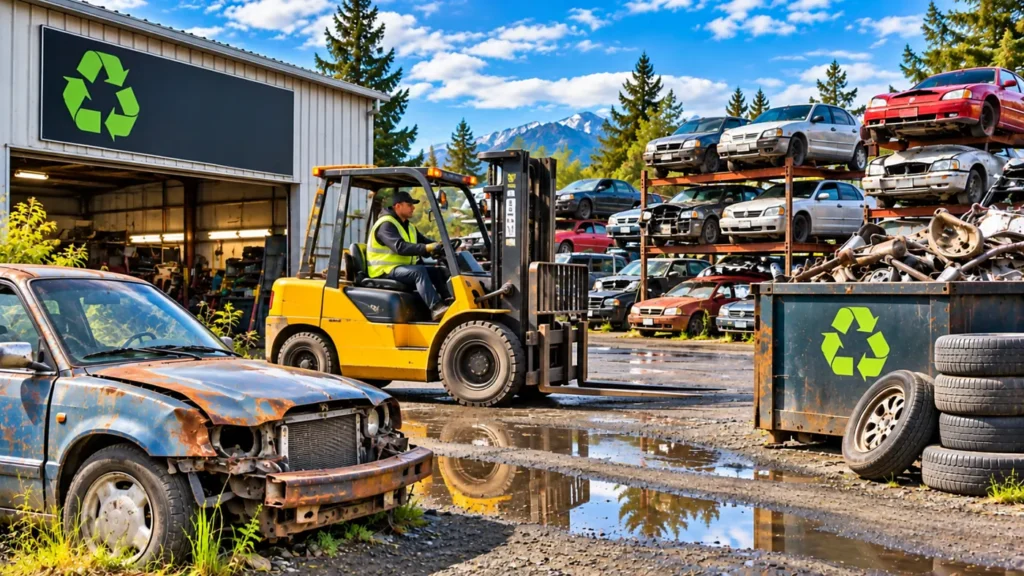
Getting a two-tonne milling machine out of a workshop isn’t like towing a car. It has to come off its footings, through a doorway that was built for people, across a floor that may not take the load of a forklift, and onto a truck without damaging anything along the way.
For indoor jobs we ask about the doors, the floor and anything the machine is bolted to, then decide whether it rolls out on skates, comes out with a forklift, or has to be taken apart first. If a machine is too big for the door, we’ll talk through the options with you, such as removing a component, using a larger door or a roll-up bay, before anything is cut or unbolted.
Nothing is cut, lifted or disconnected on assumptions. Every step is agreed with you first.
How equipment removal works
- Send the details. Call us, or use the quote form with a description, the location and a few photos of the machine and the route out.
- We review the job. We may ask for a measurement, a photo of the data plate, or more about the access. Some larger jobs need a quick site visit first.
- Agree on the plan. You get an offer and a clear outline of what’s included, what you need to prepare, the equipment we’ll bring and when we’ll arrive.
- Get the site ready. Clear the agreed route, make sure the machine is disconnected and safe, and let us know if anything has changed.
- We load it and you’re paid. The crew checks that the machine and the site match what was agreed, you’re paid, and the equipment is loaded and taken away.
If something is different on the day, such as a bigger machine, a blocked route or a missing part, we’ll stop and talk it through with you before carrying on. No surprise deductions after the truck is loaded.
How heavy equipment is priced
Most of the value in heavy equipment is its weight in steel and cast iron, along with copper in motors and windings and aluminum in some components. On top of that, a machine that still works, or one with parts in demand, can be worth considerably more than its scrap value.
- Type of machine and how complete it is
- Working, repairable or seized
- Approximate weight and size
- How hard it is to reach, disconnect and load
- Whether it needs a lowbed, crane or on-site dismantling
- Current scrap metal markets
Straight answers about cost
For most machines we buy, removal is included and you’re paid at pickup. Some jobs need more than a truck and a winch: a crane to lift a machine over a wall, a lowbed for a large excavator, or a crew to take a press apart inside a building. When a job needs extra equipment, we tell you before you agree, and it’s built into the offer.
Occasionally a machine is worth less than the cost of moving it. If that’s the case with yours, we’ll say so plainly and explain your options. You’ll never find out on pickup day.
Disconnection and safety
Shop and factory machines are often hard-wired, plumbed into compressed air or connected to gas or coolant lines. Those connections should be made safe by a qualified electrician, gas fitter or your own maintenance team before pickup. It protects your building, your insurance and our crew.
If you’re not sure what’s connected, send photos of the back of the machine and the wall behind it. We’ll tell you what needs to be done and whether we can help coordinate it.
Before pickup day
- Have the machine disconnected from power, gas, air and water
- Drain or tell us about fuel, hydraulic oil and coolant
- Remove or tag any batteries and propane cylinders
- Clear the agreed route and make sure gates or bay doors open
- Keep people away from unstable or partly dismantled equipment
- Remove tools, tooling and anything you want to keep
Please don’t start cutting or unbolting a machine to make it easier for us. It can make the job less safe and sometimes lowers the value.
Clearing several machines at once
Shop closures, retirements, lease endings and yard cleanups usually involve more than one machine. Send us a list, even a rough one, with a photo of each item, and we’ll price everything together and plan the order it comes out.
If your business needs to keep running, we can remove equipment in stages: the back of the shop one day, the yard the next. We work around shifts, deliveries and customers so a clearout doesn’t shut you down.
Who we work with
- Contractors and excavation companies replacing older machines
- Machine shops, fabricators and manufacturers upgrading or closing
- Landscapers and property maintenance firms
- Farms and acreages with retired equipment beyond tractors
- Property managers and landlords dealing with equipment left by tenants
- Families and executors clearing a workshop after a loved one has passed
Machinery removal across Abbotsford
We collect from industrial, commercial and rural properties right across the city: the business lands around Abbotsford International Airport, the Mt. Lehman and Marshall Road areas, Riverside Road, Peardonville Road, the Fraser Highway corridor and the yards along Sumas Way. Out of town, we cover Matsqui Prairie, Sumas Prairie, Bradner, Mount Lehman, Aldergrove and the surrounding Fraser Valley.
Gravel pits, job sites and farm shops are welcome too. If you’re outside the area, ask anyway. Larger machines are often worth the drive.
For everyday vehicles, see scrap car removal in Abbotsford.
Where your old equipment ends up
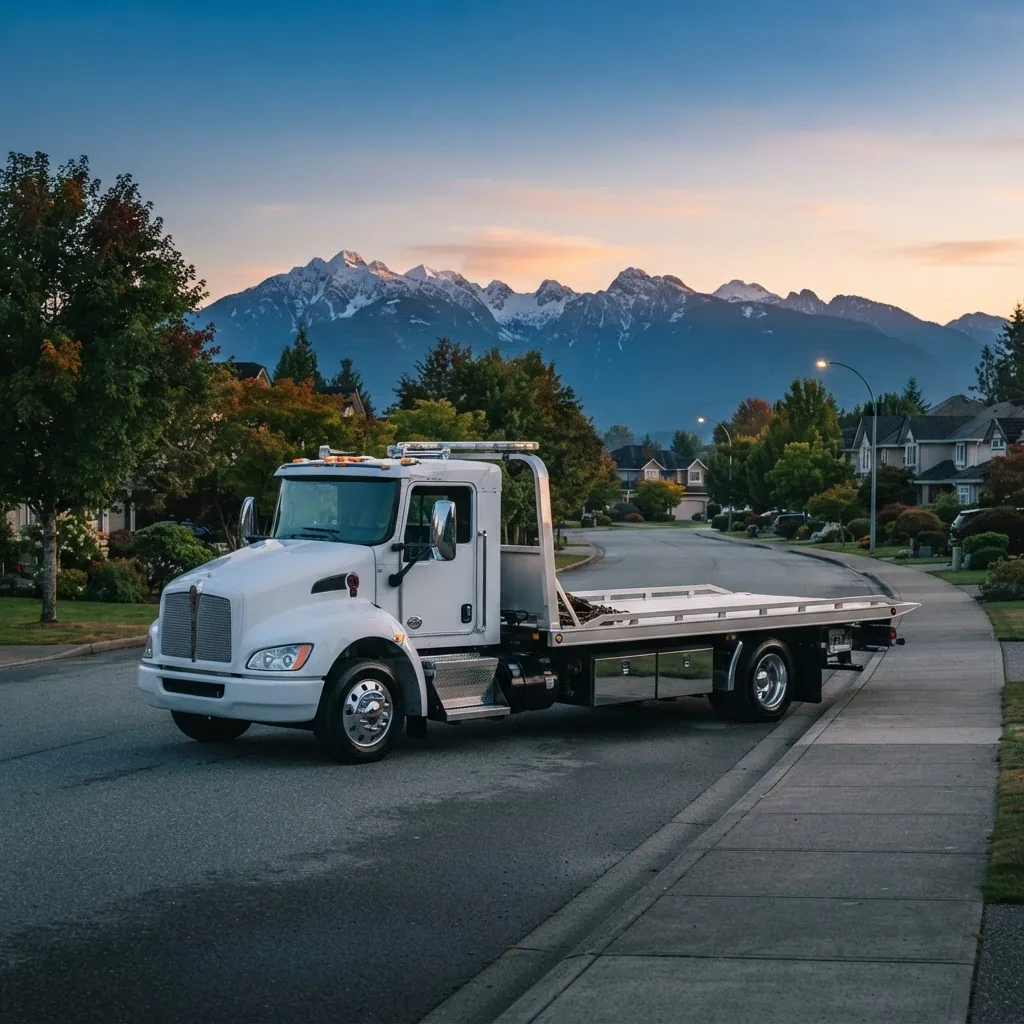
Before any machine is processed, the fluids are drained and sent for recycling: hydraulic oil, engine oil, fuel and coolant. Batteries go to battery recyclers. Usable components such as engines, pumps, motors, cylinders and attachments are pulled for resale where there’s demand. The rest is sorted into steel, cast iron, copper and aluminum and sent to mills and smelters to become new metal.
It’s the right way to retire a machine, and it keeps hydraulic oil out of Fraser Valley ditches and groundwater. See how vehicle recycling works.
Heavy equipment removal questions
Does the machine need to run?
No. Seized, fire-damaged, stripped and partly dismantled machines are all welcome. A machine that still works is usually worth more, so tell us if it does.
Can you remove a machine from inside a building?
Yes, in most cases. We need the door size, the floor surface and the route to the loading area. Photos of that route help a lot. If the machine is bolted down or too big for the door, we’ll agree a plan with you first.
Is disconnection included?
Not automatically. Electrical, gas and air connections should be made safe by a qualified tradesperson or your maintenance team before pickup. If you need help arranging that, tell us when you ask for a quote.
Is removal free?
For most equipment we buy, yes, and you’re paid at pickup. Jobs that need a crane, a lowbed or on-site dismantling may have a cost, which we explain up front and include in the offer.
I don’t know how much the machine weighs. Is that a problem?
Not at all. Send the make and model, a photo of the data plate if there is one, and a photo with something for scale. We’ll work it out.
Do I need paperwork to sell heavy equipment?
Anything that was road-registered needs the registration in your name. For unregistered machinery, proof of ownership such as a bill of sale or invoice helps. For company equipment, we need someone with authority to sell it.
Can you take several machines in one visit?
Yes. Send a list with photos and we’ll price them together. We can also remove them in stages if your business needs to keep operating.
Do you pick up small items or household junk?
No. We focus on vehicles, heavy equipment and machinery. For household clearouts, a junk removal company is a better fit.
Get that machine out of your way
Send a description, the location and a few photos. We’ll plan the removal and give you a straight offer.