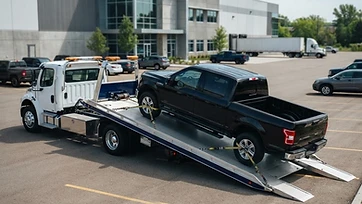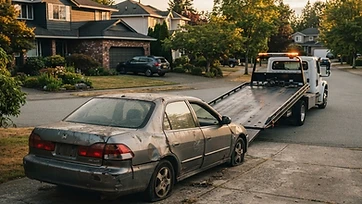
Most people never see what happens past their driveway. If you've ever wondered whether your old car actually gets recycled or just gets dumped somewhere, here's the real journey.
First stop: the assessment bay
Back at the yard, the vehicle gets a quick honest appraisal — what's worth pulling, what's worth selling, what's only worth its weight. A five-year-old wreck and a thirty-year-old beater take very different paths from here.
Fluids first, always
Before anything is dismantled, every liquid comes out: engine oil, coolant, brake fluid, transmission fluid, fuel. These are hazardous materials, and there's exactly one acceptable place for them — not the ground, not the storm drain, not the ditch. They're drained, stored and routed to proper hazardous-waste handling. It's the least glamorous part of the process and arguably the most important.
Parts, then metal
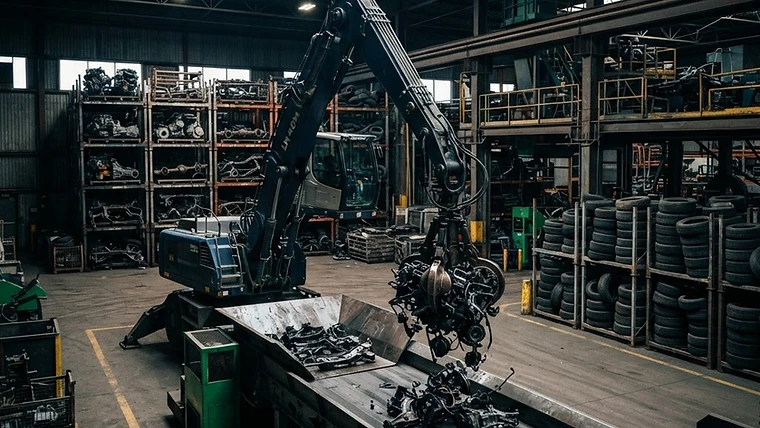
Anything with usable life — a starter, an alternator, mirrors, glass, a good set of tires — can be pulled and resold, keeping other cars on the road. What's left, the hulk, goes to the shredder, which separates ferrous and non-ferrous metals from the fluff. The steel goes back into the supply chain and shows up again in everything from rebar to new car panels.
“A car sent for recycling isn't ending up in a landfill — the majority of its weight comes back as raw material.”